
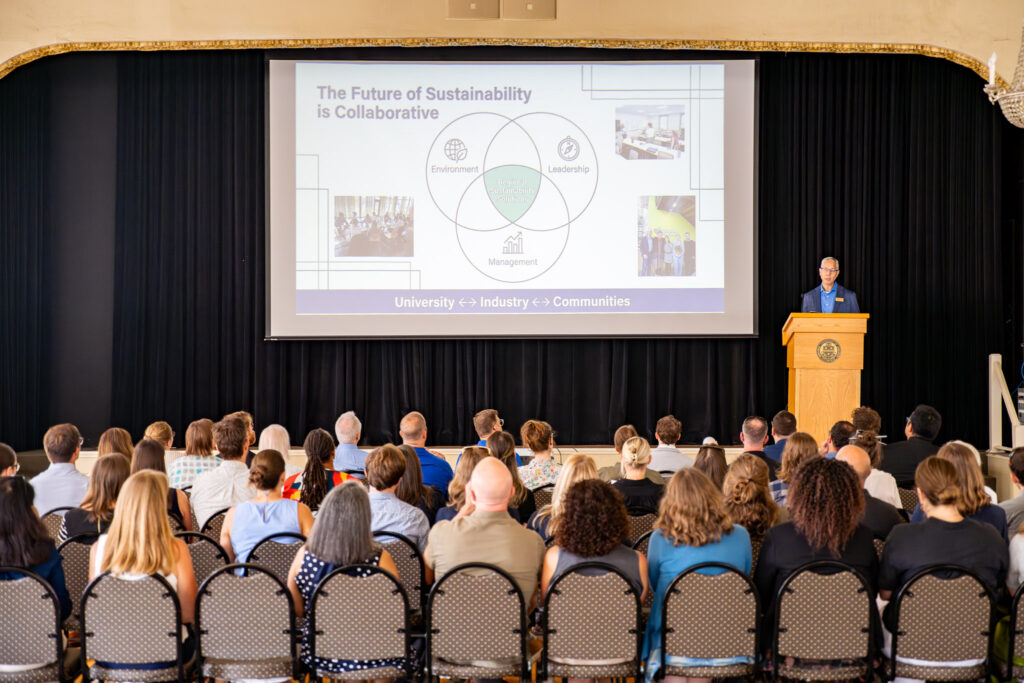
On July 15, Sustainable Pittsburgh’s Sustainability Practitioners Network brought together sustainability professionals, university representatives, businesses, nonprofits, and public-sector partners at the University of Pittsburgh for an event focused on the question: How can universities help businesses and community partners advance their sustainability goals?
Pittsburgh’s universities offer an extensive range of resources, including faculty expertise, student talent, research centers, applied projects, innovation programs, and workforce development opportunities. However, organizations may not always know what is available, who to contact, or how to begin developing an effective partnership.
This event was designed to help make those connections.
Highlighting Opportunities Across Regional Universities
Representatives from Chatham University, Duquesne University, Carnegie Mellon University, and the University of Pittsburgh shared brief overviews of the programs, resources, and partnership opportunities available through their institutions.
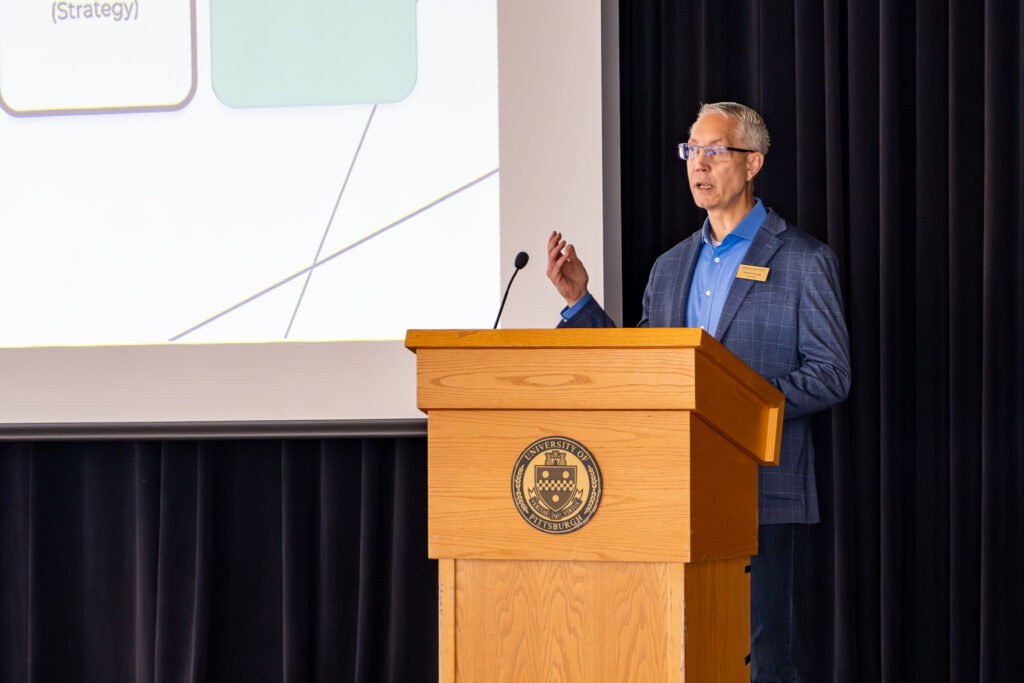
Dr. Robert Sroufe, professor and Falk School of Sustainability & Environment chair of socially responsible management, highlighted Chatham University’s approach to connecting interdisciplinary student teams with businesses, nonprofits, municipalities, and other community partners working on regional sustainability challenges. Through a collaborative model involving faculty, students, and external partners, organizations can bring forward a clearly defined challenge and work with a student team to conduct applied research, develop recommendations, and identify paths toward implementation.
Chris Rouhier, senior director of recruitment and admissions, shared how Duquesne University’s Palumbo-Donahue School of Business integrates sustainability into its academic and professional programming. Duquesne’s One-Year MBA in Sustainable Business Practices places a strong emphasis on experiential learning, including consulting projects that allow students to work directly with businesses and community organizations. Attendees also learned about opportunities to engage with students, recruit graduates, participate in executive education, and collaborate on university-wide sustainability initiatives.
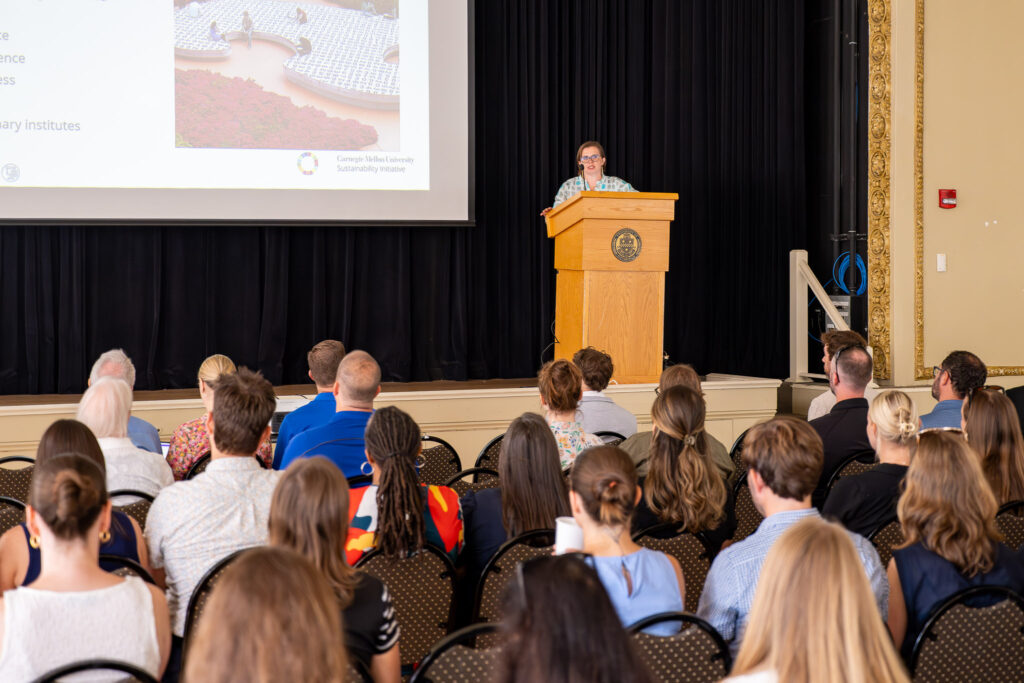
Alexandra Hiniker, director of the Sustainability Initiative, provided an overview of the many ways external organizations can engage with Carnegie Mellon University, including sponsored research, capstone courses, faculty partnerships, student projects, recruitment, and internships.
Her presentation also highlighted the Wilton E. Scott Institute for Energy Innovation, which connects companies with researchers working on energy and climate challenges.
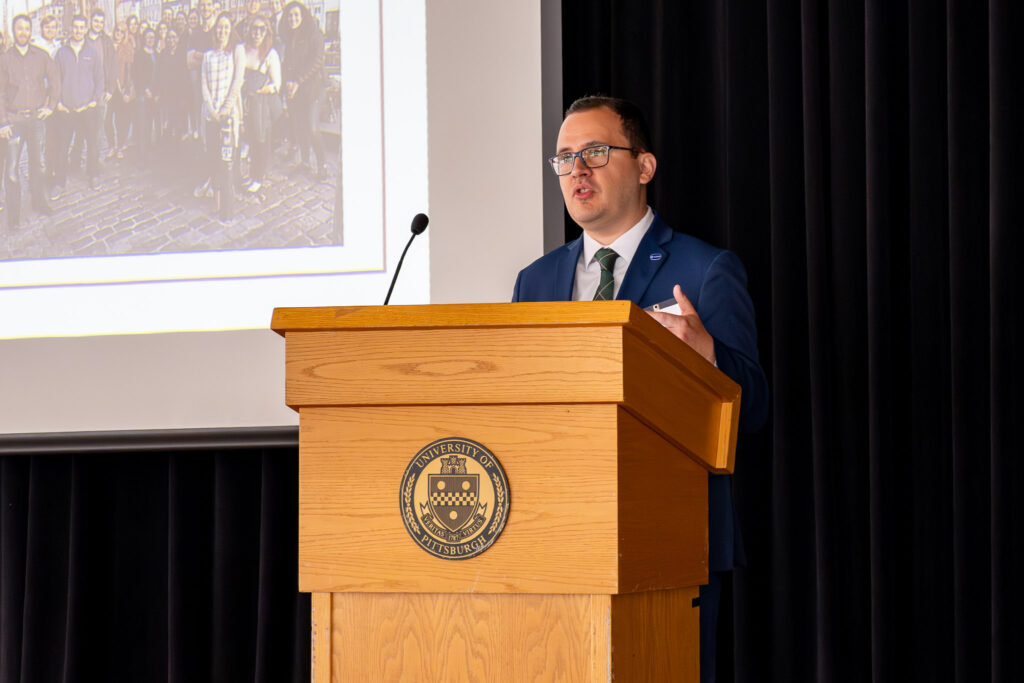
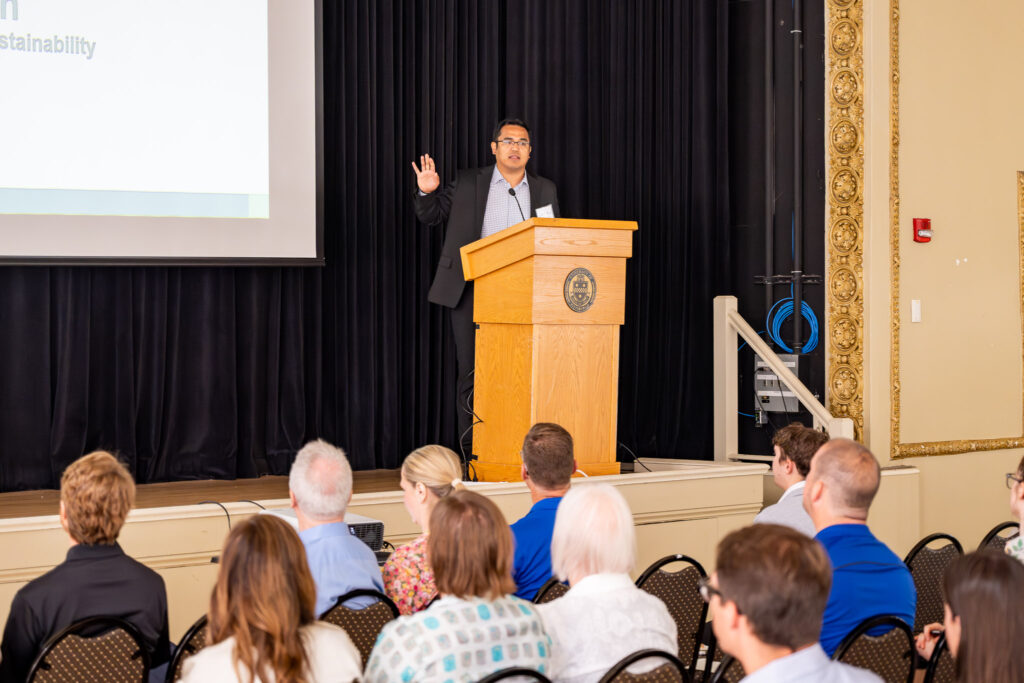
Dr. David Sanchez, associate professor and associate director for the Mascaro Center for Sustainable Innovation, shared the breadth of sustainability work underway at the University of Pittsburgh. Pitt offers several ways for organizations to engage, including faculty partnerships, interdisciplinary sustainability capstones, sponsored student research, and innovation and entrepreneurship programs.
What Successful University Partnerships Look Like
The morning also featured a presentation from Brittany Ruxton, corporate innovation specialist on Koppers’ Global Corporate Innovation team.
Koppers works with universities to gain access to new ideas, student creativity, technical expertise, and tools that may not otherwise be available internally. These partnerships allow the company to explore emerging opportunities, address under-resourced business challenges, and build relationships with future talent.
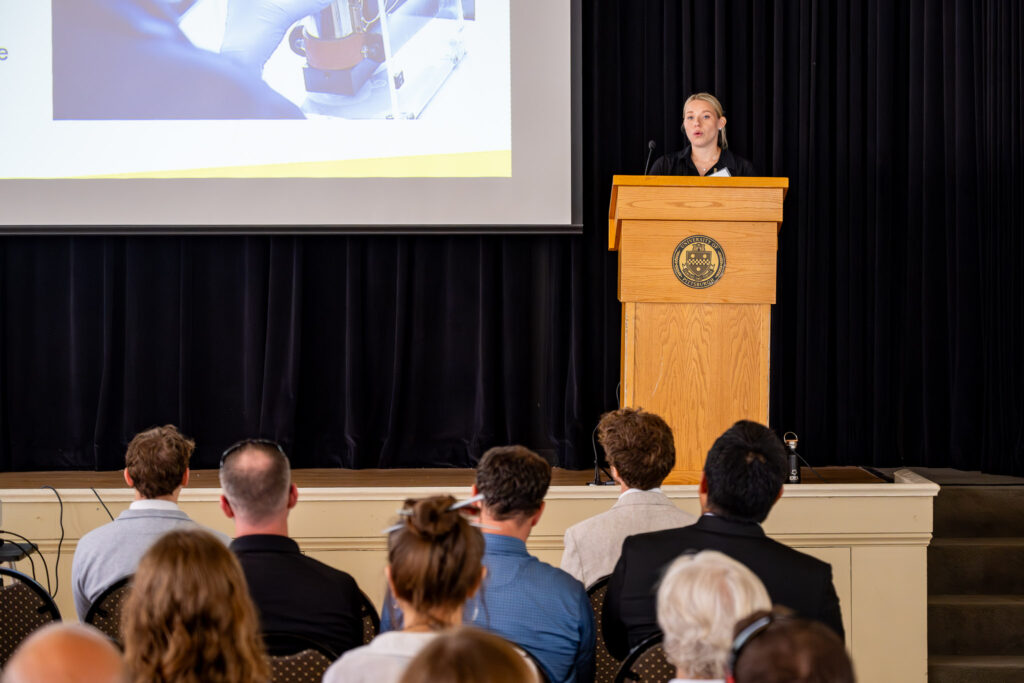
Ruxton emphasized that successful projects begin with choosing the right problem. Strong university projects are meaningful to the business, achievable within an academic timeline, and structured to provide a valuable learning opportunity for students. Projects with urgent deadlines, unclear objectives, or mission-critical outcomes may be less appropriate for a student team.
She also shared the importance of clear roles and consistent engagement. Koppers’ innovation team coordinates the university relationship, while an internal business sponsor provides technical knowledge, context, and feedback. Faculty advisors guide the students, and the student team delivers analysis, prototypes, or potential solutions.
One example involved a partnership between Koppers and Carnegie Mellon University’s Heinz College. A student capstone team developed an automated tool to improve how Koppers planned the loading of railcars. After two semesters of development and refinement, the tool reduced planning time by approximately 85 percent, cut average truck usage in half, and improved the efficiency and sustainability of the company’s planning process.
Creating Space for New Connections
Following the presentations, attendees took part in an extended networking and sustainability showcase. University representatives were available to answer questions, provide more information about specific programs, and discuss potential collaborations with businesses and organizations.


Conversations covered a wide range of opportunities, including student consulting projects, internships, applied research, technical expertise, workforce development, data analysis, product innovation, and community engagement.
The morning reinforced the value of creating stronger connections between the region’s universities and sustainability practitioners. Universities benefit from opportunities to connect students and research with real-world needs. Organizations gain access to new perspectives, expertise, and potential solutions. Students build experience working on meaningful challenges that can support their professional development.
Sustainable Pittsburgh would like to thank the University of Pittsburgh for hosting the event, as well as all of the presenters and university representatives who helped make the morning possible.