
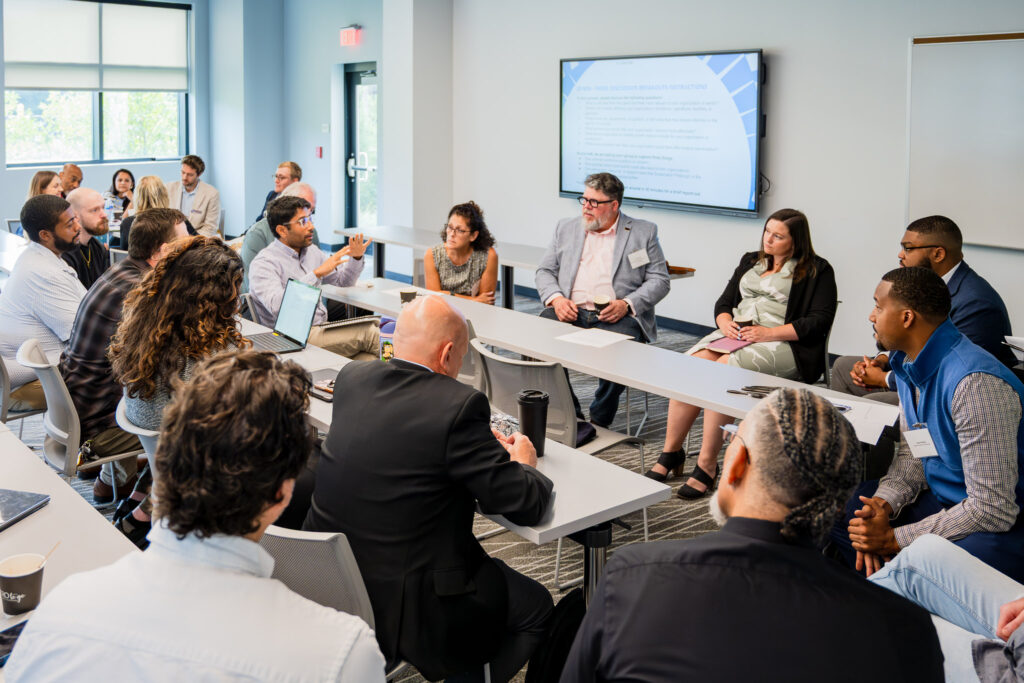
On July 29, Sustainable Pittsburgh convened the Clean Energy Workforce Roundtable at the Community College of Allegheny County (CCAC) for a session focused on AI Economy Workforce Readiness: Employers, Workers, and Responsible Infrastructure Growth. The discussion centered on a timely question: How can the region prepare employers and workers for the AI economy while ensuring that AI-related infrastructure growth creates meaningful local workforce and community benefit?
Following welcome remarks from Dr. Quintin Bullock, president of CCAC, John Ukenye, senior director of policy and strategic initiatives at Sustainable Pittsburgh, moderated a panel featuring:
- Dr. Debbie DeLong, Chatham University
- John Schultz, Levin Furniture
- Joelle Salerno, Western Pennsylvania Chapter of the National Electrical Contractors Association
- John Walliser, Pennsylvania Environmental Council
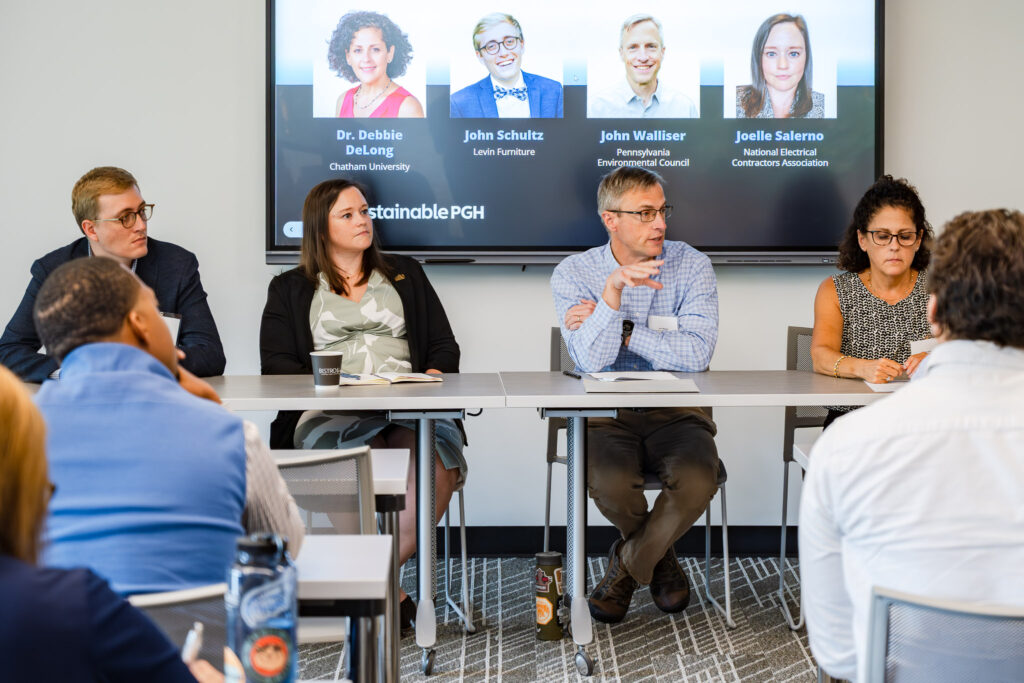
The panel explored two connected dynamics shaping the region’s workforce future. First, AI is changing how organizations think about job design, workflows, data use, employee engagement, and competitiveness. Second, the physical infrastructure behind AI, including data centers, grid upgrades, and energy storage is creating new workforce needs connected to clean energy, construction, skilled trades, facilities, and operations.
Panelists agreed that AI readiness extends well beyond technology, requiring organizations, workers and policymakers to adapt together. Discussion centered on the organizational changes needed to successfully integrate AI, including helping employees identify routine tasks that can be automated so they can focus on higher-value, more creative work. Panelists also highlighted the growing demand for skilled trades, particularly electricians, and the need to prepare today’s apprentices for an evolving workforce shaped by AI and increased electrification. The conversation concluded with an overview of Pennsylvania’s GRID Standards, which provide a framework for responsible data center development by balancing energy affordability, workforce development, environmental performance and community benefit.
A recurring theme was the need to define AI literacy broadly. Panelists discussed the importance of clear communication, strong writing, domain knowledge, cybersecurity awareness, and the ability to evaluate and improve AI-generated outputs. They also noted that small and mid-sized employers may need support from educational institutions, workforce partners, and community organizations as they begin planning for AI-related workforce changes.
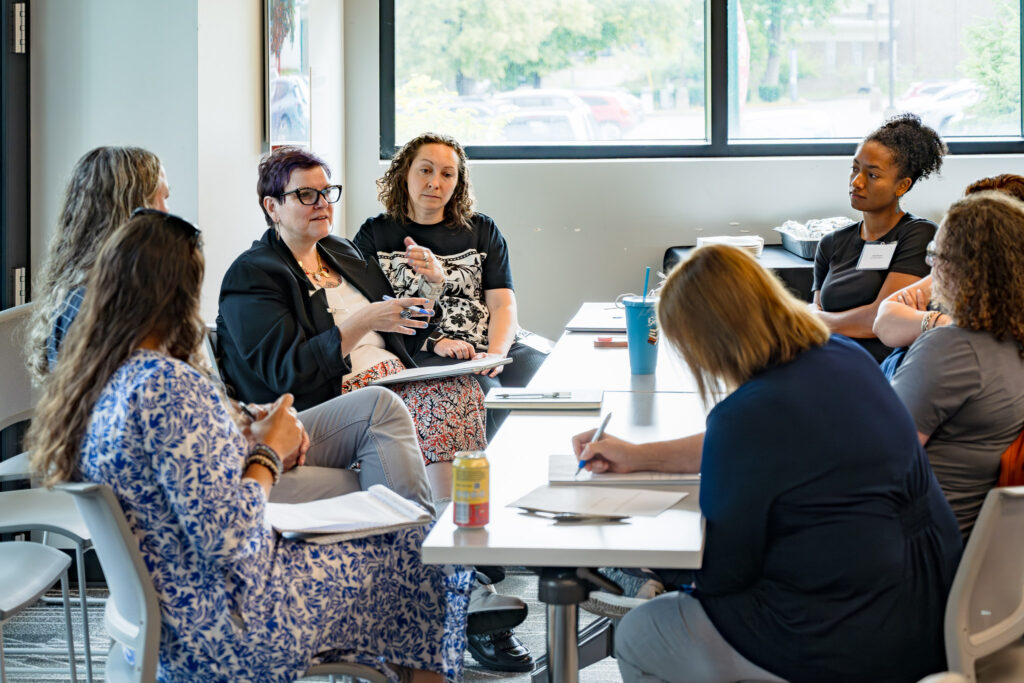
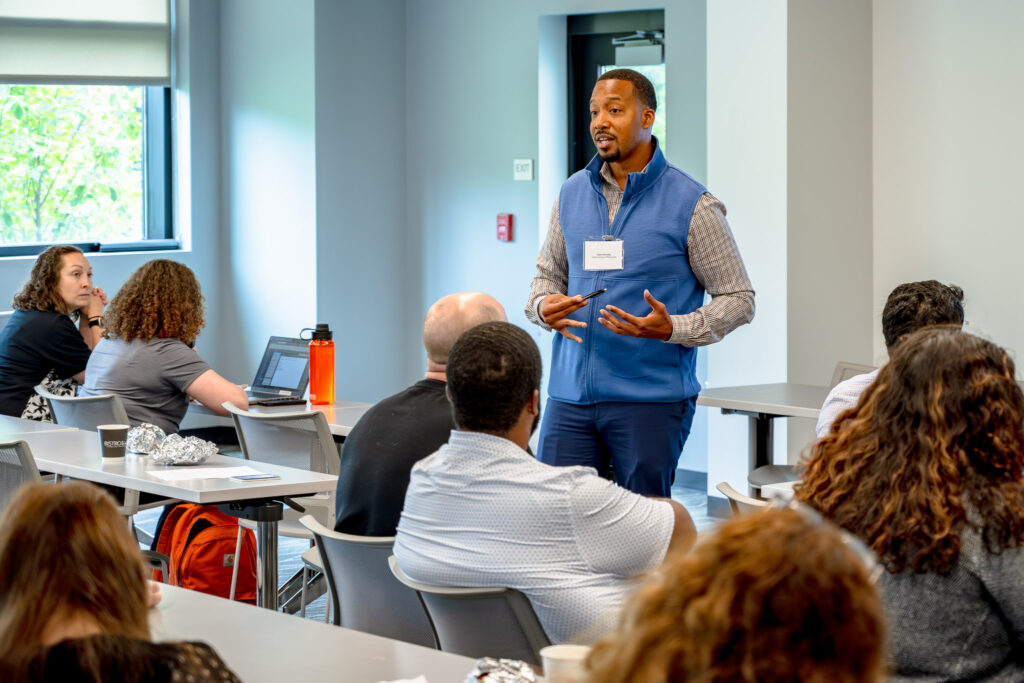
Event participants then moved into breakout discussions focused on employers and business operations; workforce, education, labor, and training; and community benefit, public sector, and infrastructure. Discussion topics included bridging education and the trades, using AI to strengthen training models, addressing equity concerns around data center development, distinguishing between short-term task training and long-term career pathways, and improving partnerships across business departments and sectors.
The Roundtable also included updates from Allegheny County Economic Development and the Allegheny County Department of Sustainability. Their presentations highlighted the county’s Climate Action Plan and ACT NOW Executive Order. Both of these regional initiatives aim to support clean technology, circular economy, job training, regional coordination, and community benefit.
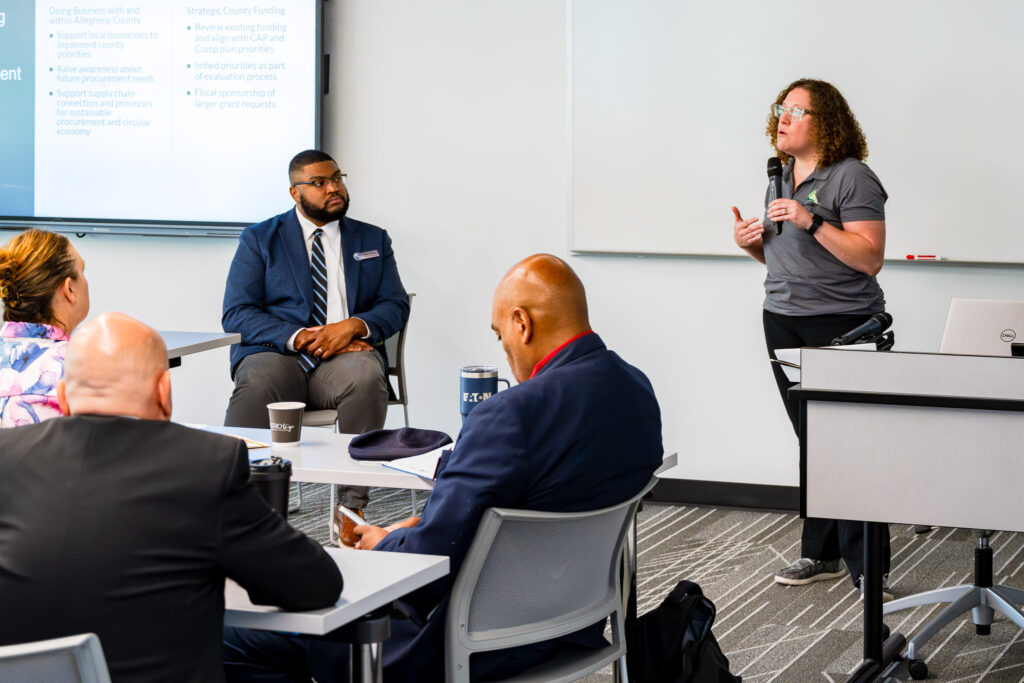
Sustainable Pittsburgh also shared an update on the Future Energy Jobs Hub, including ongoing conversations with K-12 partners, adult learners, veterans groups, and military-connected communities. The Hub continues to serve as a shared regional resource to expand career awareness and help students, jobseekers, workers, employers, educators, and community partners better understand clean energy career pathways.
This convening reinforced that AI readiness is already a workforce issue, an employer issue, an infrastructure issue, and a community benefit issue. Sustainable Pittsburgh will continue using the Clean Energy Workforce Roundtable to convene partners, share resources, and support coordination across Southwestern Pennsylvania’s clean energy workforce ecosystem.
The next Clean Energy Workforce Roundtable is scheduled for October 28. Reach out to John Ukenye if you are interested in getting involved.